Why Are We Building This Car at All?
Many companies are optimizing products before fully clarifying what those products should actually mean.
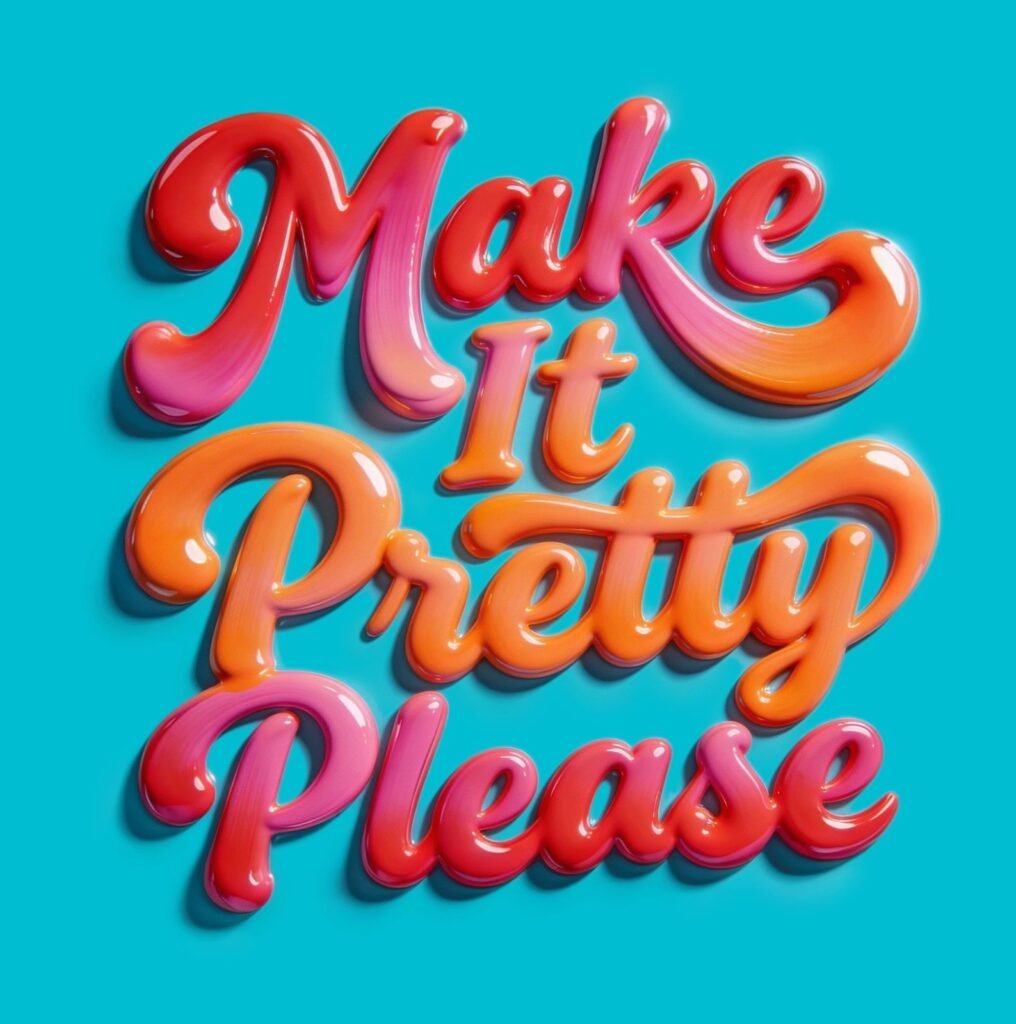
When Pretty
Is Not Enough
Why are we building this product at all?
A vehicle program can consume billions.
Years of development. Hundreds of specialists. Thousands of decisions.
And yet, one fundamental question often remains strangely unclear:
Why are we building this product at all?
In many automotive development processes,
design is expected to solve problems that were never strategically clarified in the first place.
The result is an industry full of technically competent products with increasingly interchangeable meaning.
This opening episode explores the hidden tension underneath modern automotive development:
What happens when companies optimize execution before defining direction?
Key Perspectives
"There are a thousand correct answers — but the big answer isn’t there."


"If the why is missing, this is where the misalignment starts."
Strategic Problems Explored In This Episode
Strategic Problems Explored
In This Episode
1 | Strategic Ambiguity
Design is often expected to solve problems that strategy never clearly defined.
2 | The Benchmark Trap
The more brands optimize against competitors, the more interchangeable products become.
3 | The Collapse of Differentiation
When technology becomes accessible to everyone, meaning becomes the real differentiator.
Closing Thought
Design cannot solve strategy.
It has to convey it.
EPISODE TRANSCRIPT
SEASON 1 | EPISODE 1
Why Are We Building This Car at All?
Felix Kilbertus: There’s a moment in almost every car program. You stand in front of the clay model. The proportions work, the surfaces are beautifully executed, and still something feels wrong. Not because the design is bad, but because nobody can clearly explain what this car is supposed to change for the brand. And that leads us to a simple question.
Why are we building this car at all?
Wolfgang, it is, of course, more than a simple question, but let’s get into this.
Wolfgang Philipp: Yes. Hello, Felix. The feeling you described, it doesn’t feel right, it sounds like a design problem at first, but I think we’d both agree that it’s a strategic one. It’s a deeper problem and the feeling you describe are just symptoms.
And the question I would like to ask back is what is it supposed to feel like, the model, if it doesn’t feel right? This often boils down to missing clarity regarding the brand and its meaning. What should it feel like?
Felix Kilbertus: So the best the best feeling is that when you’re at the right point when you had time to refine something that you look at everything and you’re like, well, this is it. It’s a rare moment because even designers tend to never be completely happy. There’s always one more thing and there’s always a bit of a moment of sadness when you sign something off, because you might still want to improve something in detail, but apart from that – that’s the designer’s disease of course of never being happy – you should feel the purpose, the mission, the overall balance for the exterior, but of course also for the interior. Clarity of message and the conviction, yes we’re doing something good for the brand.
Wolfgang Philipp: So brand is in line with the design with the aesthetics. Can we go a little bit deeper regarding the design, what else does feel right?
Felix Kilbertus: So design is like what I think of when I say Design with a capital „D“ of course, is the everything the customer feels and sees and experiences. So this is the skin in many ways, the surface. But of course just like with a person, the surface is only the thing that you see immediately but you perceive everything that is underneath. You perceive the muscles, the skeleton, the sensors, the intelligence of a person, and so on.
So just like with the person, everything needs to come together into something that is coherent and right. So yes, it’s the brand. Yes, it’s the aesthetic. But it’s also the package and the proportion that is below it. It is the general interior architecture that needs to be modern. It is also colors and materials that really push the game forward. So it’s many things that just come together. And design is kind of like a function, as you know, a catalyst, if you will, that brings all of the forces, the creative forces in development in general, into a shape that has never been before.
Wolfgang Philipp: To me, this is the feeling you describe when the brand is really clear and you know what it’s about, what it says about its driver. And a design can convey this as clearly as possible, and the exterior and the interior, they both speak the same language. We get this coherence you were talking about and also this feeling that it feels right.
We will try to answer this question, „Why are we building this car at all?“, and we will divide this into three parts. So the problem first, what is the problem if we don’t really know the answer to this question? And then we’ll go a little bit deeper, see what the consequences are, present you perspectives, how to start answering this question, and give you some insights how to do this.
Felix Kilbertus: Absolutely. Let’s dive into it – and I’d be very curious also how you describe that sort of feeling from a strategic point of view, when does something feel right. Because you describe something, a feeling that sounds almost like a feeling of harmony and coherence.
From a design point of view, I can only add that yes, there is that sort of harmony and coherence, something that feels right, but at the same time, there’s always a tension; the tension of the slightly unknown – that is a different feeling, that is a feeling where you’re a little bit uncomfortable, because it’s not out there yet, no one has ideally done something quite like that, so it is a complex feeling. It’s not as simple, „Ah, okay, all the boxes are ticked.“
Wolfgang Philipp: Yes. It’s not Malen nach Zahlen. And there is no right solution, no objective right solution in this life. This is a very interesting point that you mentioned that you are in the future, you are designing something that is not out there yet. There are no reactions from the user yet. And good design is not so bland that it’s obvious at first sight, you understand it, and then it’s consumed and it’s gone. So great design grows in your mind, it’s like a good song you keep listening to and you discover some nuance over the years and this multi-layered, this deep layered sensation, this is what great design is also about.
But let’s stick to the problem. So if we don’t know why are we designing this car at all, how does this feel like, how does it play out in the daily life of a designer?
Felix Kilbertus: So I think, when we say like, „Why do we build this car at all?“, when we don’t have the answer and we look at the model or the images and we feel a little indifferent – I think that’s the biggest alarm sign when people are indifferent. Because then you’re like, yeah, maybe, maybe this, maybe that. It just feels unresolved.
And it is of course one of the biggest questions in the development process in general. So why is it so big? Because it’s almost a dangerously big question, because not a lot of people dare to ask that question. Not a lot of people are allowed in their role to ask that big question. But everyone kind of feels it in the process. And that’s why it’s interesting to talk about it.
Let’s analyze what could happen if we don’t have a why question.
Wolfgang Philipp: Yes. What I would like to add is that often the why is just assumed. So you don’t really bring it up because you assume it has been asked. And if we’re really honest, the why often is quite simple. It’s to make money with the car. And sadly, today most products exist just to deliver numbers and not to create some real benefit that hasn’t been yet delivered.
From my perspective this leads to a completely difficult and different mindset than the original mindset brands were built on. So today we experience this scarcity mindset, where you say „Okay, this is the market, this is the segment, this is the top player in the segment; What do we have to take away market share from the top player and gain market share in this segment with similar features – with the same model basically – and make profit?“
And the moment this happens you stop looking at the customer and the use case and you start looking at other brands – what are they doing – and this leads to this vicious cycle where you just start comparing and you try to do this better than others but it’s not really about the user anymore.
Felix Kilbertus: I see what you mean because you don’t always ask the big why question because you assume that other experts have good reasons to do this. And as a creative or anyone involved in the process you then you kind of like stop thinking for yourself. That’s one reason. The other reason is that it’s true, in a sense that there’s thousands of people involved in any R&D process and there’s regulation, there’s aerodynamics, there’s manufacturing principles, there’s market research, there’s homologation, there’s production quality, there’s literally hundreds and thousands of requests and experts.
The consequences, as you describe very often, that before you start asking the question, you have already a thousand answers. And that means that the answers can be self-generated by the company and it tends to forget what you described as the big picture: what does the client really need, what does a future customer really need, what do we need to do for a brand, and what needs to happen for this sort of vehicle, for this idea of mobility? So the big questions kind of get lost because so many other questions have been asked, and the why is a dangerous one to ask.
Wolfgang Philipp: That’s true and it’s also uncomfortable to ask it, because you are in the daily business – let’s not forget this, people are overwhelmed with their tasks and urgent to-dos. And the last question you want to hear is, „Why are we doing this at all?“
But if the why is missing, this is where the misalignment starts. As you described with all the experts involved, aerodynamicists and exterior, interior – let’s just stick to design for a moment – if there is no shared mission, no common goal, everybody is left to optimize their own but there’s no shared underlying idea. This is the feeling you get when you look at it probably, that you see, yes the design is fine, the exterior is great, the aesthetics are great, but it’s just not right. Because the different puzzle pieces they are perfect – but they don’t connect.
Felix Kilbertus: Yeah, that’s a good analogy, because it feels like there are a thousand correct answers, but the big answer isn’t there. And that’s the interesting thing.
When you think about this, you could say there are certain cars that are not perfect. There might be some mistakes even in the car, but the big why is so clear that you forget the small problems. And there are other cars where all the detail whys, the thousand whys are good or okay, but overall there’s absolutely no message. And that’s quite interesting.
So even when you look back in the past, nowadays, a lot of people still talk about Tesla and the unorthodox methods of Tesla. And Tesla is a company that started with a big why, for example. So it has many problems in execution, in reliability, in perceived quality and so on. But they ask a really big why question. They really started with an open question, how can we prove that exciting, sustainable electric mobility is possible today and really move the perception of EVs as slow sacrifice devices into something that is exciting and attractive. When you look at the cars in detail, whether it’s from a design point of view, and there are many things you could pick apart on Teslas, but it has an overall clarity of concept, clarity of message. And that’s executed on many levels, whether it’s the interfaces, whether it’s the color choices that are quite reduced, whether it’s how you think as a system rather than as a vehicle. So Tesla for me is a great example for a really clear big why.
Wolfgang Philipp: Yes, that’s a great example. And it shows that the whole can be greater than the sum of its parts. It’s not so important that everything is optimized to the maximum at the price of a clearer picture.
Let’s go to the consequences for a moment. What does it mean if there’s no big why or no clear bigger picture, whatever you name it? If there’s no shared mission and we can go a little bit into Tesla later and see what the why is about today, and its limitations today. But what are the consequences? I mean, it’s not just that it doesn’t feel right, the design.
Felix Kilbertus: So the risk is that you, as you described, that you kind of in a world of comparing feature by feature, you’re designing for comparison tests, you’re designing for Excel sheets almost to fulfill some chores, like you’re connecting dots and you hope that the overall shape is good. The risk with this is that it’s fundamentally retrospective. So you kind of compare yourself to things that exist, incremental improvement. And in certain segments, that might even be a good approach when you need to do basics. For basics, that’s fine, but it will never help you for character and for overall expression. So from a design point of view, without that big why question, if you don’t have a clear concept in mind, a key phrase, a key persona, a key statement, then you really risk that the character of the product is lost, which means that also the emotional response from many customers will be very indifferent. And therefore, with an indifferent product, you will ultimately compete on price. If it’s not on the more emotional side or even the more practical side, where you say, okay, this device, this car solves one of my problems. Or is so desirable that I want to buy it. So the risk is that you’re neither of these. That’s the big risk.
Wolfgang Philipp: From a brand perspective, you always try to differentiate your products. So one of the key questions is, how can we make something unique or so compelling to our target group are willing to pay a premium price for it? But if you start with the target group everyone has, and try to build a product everyone builds, you start with matching instead of differentiating.
And this is the irony. The brands are doing the opposite of what they want, really. So they start by matching first and become really comparable. And then we go down this commoditization route. So first the product becomes comparable. And we see this in every segment. There are at least three direct competitors with almost identical features. And the more generations are created over the years, the more similar these products become. And today we’ve reached a point where the products are almost interchangeable. So the customer, who is often the same customer for every brand, ironically – they cannot really tell the products apart anymore. And then it comes to this point, what you mentioned now, the price is the main differentiator. And then it comes down to who can produce or who can manufacture the product cheaper. So because your only religion is market share and profit. And you only have the margin to deliver on that.
Felix Kilbertus: Let me try to build a little bit on this and maybe also partially challenge you on this. Because every generation, when you buy old car magazines, from 10 years ago, 50 years ago, there’s always this line, „Oh, all cars look alike nowadays“. And it is usually easy to say, „Well, but listen, look at this, there’s so much character and different sports car brands.“ And yes, there’s no similarity between a small car today, a pickup truck today, a sports car. So there’s a lot of variety.
But I do agree with you that today we see a particularly strong convergence of forces, not only in the car industry, which I would describe as the problem of hypermaturity. So we see success is very quickly analyzed today and very quickly replicated. The best example is really the progress that we’ve seen in the Chinese domestic market, where the last 30 years were years of extreme progress, extreme success in many ways. And it was maybe comparable to the early days of the car industry in other markets. So really quickly developing, quality was a differentiator, features were a differentiator. But because the progress has accelerated more and more, the immediately successful things have been replicated very, very quickly to a point where you don’t even ask yourself why this is a good idea or a bad idea. You just replicate at an extraordinarily quick pace.
It’s easy to observe that in the Chinese market because effectively the products actually look the same and maybe some of the brands are relatively pale in terms of character because they’re so new. But you can also observe that in more mature markets, older markets in Europe and in the US, because this phenomenon is the same thing. Something that works immediately gets picked up. And if we’re honest, even the premium brands in Germany, for example, every time Audi produces something, most likely there is a reaction from Mercedes, which then provokes a reaction from BMW and so on. So even in the premium segment in some of the most competitive markets, there is a tendency to benchmark and to look at what works immediately.
Wolfgang Philipp: I think we have to differentiate between some benchmarks that really are an improvement and become a new baseline, like safety, quality, comfort, power. If you buy a new car today, there is no unsafe car today. There is no rust warranty anymore because the cars don’t fall apart after five years. So the baseline for a product today is very high.
The most recent shift was in design probably, because aesthetics has become a new baseline. So there are no really ugly cars anymore – I hate to say it this bluntly. And the shift in AI, it also accelerated the whole thing. And we see this immaculate aesthetics in newcomer brands that come out of nowhere. And they just launch with a car with 1,000 horsepower, beautiful design and top quality, manufactured by a third party manufacturer in Austria, for example. This product has it all. But it’s just a collection of features if it’s not held together by a greater mission, by a greater vision – or by the brand.
Felix Kilbertus: That’s a good point, because as you said, we’re living in a world of high quality, completely agreed. We’re living in a world of instant torque. No more rust unless you do something wrong, or you crash your car. So, yes, the baseline is extremely high. And the interesting phenomenon that we see now is that we’re getting less adventurous when it comes to the future because we’ve been used to such a high level that breaking these recipes almost seems dangerous. People seem almost adverse to taking the bigger risks that you did in the past because there was also faster progress aesthetically and so on. Because the steps were bigger from one generation to another.
So we’re living in a hyper-refinement. Maybe the analogy is, in a certain sense, software development, where you have quicker, faster adjustment cycles, but you don’t necessarily always refine from the ground up. So there’s a lot of patching things up, using recipes, using batches almost and plug them back together. But yes, it’s a paradox situation. We’re living in a world where the worst cars still have great proportions, still have great reliability, but they are weak in character. So this is the paradox of today. There’s a convergence to the middle, a convergence to mediocre success – and not enough character and boldness and taking strong points of view.
Wolfgang Philipp: Yes, I like the notion of the hyper-refinement. When we look back to the 50s, 60s, 70s, there were these huge leaps from generation to generation and you could see dramatic improvement in technology, in aesthetics. And now we’ve reached this close-to-perfection state, where it’s hard to improve a product that it makes a tangible difference.
We might have this in software, but this is something I would really like to challenge because the software defined vehicle – people don’t cannot tell the difference so you you might have a significant update and it might be revolutionary from the software perspective, but the average user has no idea what happened. We see this also in autonomous driving, there is a lot of innovation and we have this breakthroughs but I cannot tell the difference between a Tesla driving autonomous and and Mercedes – I guess very few people can do this. There’s no way for the average user to tell a difference.
Felix Kilbertus: It’s an interesting point, how do you differentiate something that is less visible, less polysensorial than in the past, because you had bigger differences between one engine to another, one transmission to another. That tends to narrow that gap.
I would still say that this is a strong battleground for brands. So there’s two approaches. One is to say, well, let’s go with useful archetypes, things that we know whether it’s on your Samsung phone or on your Apple phone. Certain standards quite simply, UX UI standards.
The other one is – there is still a very strong tendency from the automotive OEMs – to create a consistent brand experience. So there’s a lot of attention especially by the premium brands to make it unique, to make it feel in a certain way around the corner, even in the autonomous drive features. I do feel slightly differently when i know I can trust one system because I can predict it maybe better, because the visuals and the acoustics and the vibrational feedback is maybe better or worse.
You still feel of course the differences in suspensions and so on, between a newcomer brand and an established brand, but the margins, as you rightly say, are becoming smaller. And that’s the big challenge at the moment. This sort of perfection within a paradigm, and I think in the olden days, the paradigm shifted more quickly. Now we have a super solid, hyper mature paradigm, and reached in certain ways near perfection level certainty at a given price point, within the paradigm. Now the question is, if you don’t have this why, if you don’t ask the big why question, you will forever be stuck in the paradigm, in the market segment, in the thousand small questions, and not in the big question.
Wolfgang Philipp: Yes, at first sight the question „Why are we building this product at all?“ seems really dangerous, and it’s unpopular to to ask this, but this is the safest question you can ask today, really. Because it forces everyone to step back and rethink what you’re doing. You’ve said that the risk taking was bigger in the earlier days, or in the last decades, and that’s exactly right, because today you don’t know what risks to take. And let’s not forget, there is so much money involved.
If you can play the safe bet, why not play it? But the risk is that you become irrelevant. And this is what we see today, that brands are really losing their relevance. And the shift to electric mobility is accelerating this, because suddenly we are trying to re-engineer a product concept that is decades old. The last breakthrough was the SUV probably. And this is at least 20 years old, the idea. And now we’re trying to re-engineer this electrically and hope for the best. But the brands are just losing relevance if they keep refining the past and optimizing the nth percentile, but not starting with the big chunk that can be optimized and really differentiate a brand today.
Felix Kilbertus: It reminds me of this sort of shifting paradigms. There’s one historical parallel to this. When I’m thinking of Ford and the Ford Model T, that was probably the most successful mobility device in the entire history of mankind. It sounds grandiose. But they had about 80% market share with one model worldwide. Just think of it, how impactful that was. Of course, that means that Ford was therefore responsible for making mobility available to the masses. It became something that was truly affordable. Prices went down from year to year. We all know these stories. And that was a new paradigm, the affordable car with limited factory options. We all know the probably urban myth of „Any color as long as it’s black.“ But these cars were extraordinarily versatile. So people would finish them in different ways, use them for different things, use them as commercial vehicles and so on. It’s quite extraordinary how much could be done with this one model. So this was a perfect paradigm. No one could compete with this because you couldn’t incrementally improve one aspect or another. And there were hundreds of car makers at that time.
What really happened then is that some clever people at what was to become General Motors said like, well, listen, there’s also unmet needs. And what are these unmet needs? These are needs that are maybe a bit more emotional. Maybe they’re linked to prestige. Maybe they’re linked to different types of usages in this now expanding mobility market. And the modern market segmentation was born by General Motors. The classic five-layer segmentation, Cadillac on top, Buick just below, Oldsmobile, Pontiac, and ultimately Chevrolet as the mass market plinth for the pyramid of the other brands. So the recipe here was, yes, there is a strong paradigm, but you broke the paradigm very successfully by doing something very different. And that’s something that really made life for Ford quite hard because Ford didn’t have an answer to this back in the day. They stuck to their paradigm for quite a long time. So both of these models were extremely successful, doing exactly the opposite. That is a big shift in mindset and in paradigm.
Wolfgang Philipp: So the why of the Ford Model T, what was it? It was probably to enable people to do things they couldn’t do. Suddenly your reach expanded exponentially. You could visit aunt, whatever, 100 kilometers from home – or more relevant, you didn’t have to live where your working place was.
So it changed society. But once this was the baseline and a car was no longer just a faster horse, it was a standard product in society, then the why shifted. And this is what General Motors did. They saw that there’s a new why.
And this is also to come back to the Tesla case you mentioned before. Tesla started with a very strong bigger picture with the idea to make electric mobility possible the way we know it today, or to make it even the same as conventional mobility. But now it’s no longer special. Every OEM has an electric car, a BEV that can match this baseline. And now Tesla can slowly start to ask this question, „Why are we building this car at all?“ and refreshen their why.
Felix Kilbertus: I think Tesla, like many other brands, now needs to start to redefine their why because they’ve accomplished their first mission, their first generation. You’re right.
If we want to stick to this example or use the metaphor of Ford and General Motors in the early days, we’re kind of in this paradox situation where we are both in this mass market like the Model T. Cars really are available to more people than ever before. And at the same time, we’re hyper segmentized. So we’ve learned the lesson of GM we’ve learned the lesson of Ford but we’re living in a world where it’s therefore very easy to jump into this what we call the weak brief where you say „Just make it pretty please, just make it a little bit better!“. This of course is the ultimate nightmare, because from a brand perspective and certainly from a design perspective, that sort of weak briefing makes it generic. Because it’s both very specific, you have a thousand answers from all the departments, and it’s super vague, and you don’t really have that strong mission in the creative process. So that’s why it’s important to have the strong why. Why do we want to do this? And what is the role of this product?
Wolfgang Philipp: Okay, then let’s move on to the solution part of this episode. How do you get this why, and how can I as a design leader, or whoever involved in the process make this happen?
Felix Kilbertus: We need to talk it through from a strategic point of view, I would say, from a design point of view, from a product point of view. But ultimately, it is about the big picture, and it is it is a leadership problem.
As you said, this is this is really the superpower of leadership to ask the big questions. And leadership, the higher you go up in hierarchy, has that role and has the permission to ask that question more so than everyone else. Yes, there is differences in management methods. There are certain management methods that really improve gradually, that bring opinions from the shop floor up all the way to management decisions. And that works well for incremental improvements. The Toyota Way is probably the most famous example of it. Classic Kaizen, enabling people to report problems up. But the big decisions, the big why questions, this is a leadership expertise, a leadership function.
Wolfgang Philipp: Definitely. And we need new, bigger pictures again. And to create them, we need a completely different mindset. We need to shift away from the scarcity mindset, what are others doing – and being scared of being overrun or something taken away from us – to an abundance mindset again where we start with the user, and the brand ultimately: What are we about? What is our reason to exist in the first place? This is the most important question today.
Right now, this is a pivotal moment. We’re at the dawn of a new era, and today OEMs create the heritage of tomorrow. If they don’t create it, if they keep reinventing the past or refining the past, there’s nothing left. And the brand is the most important feature in this new era. It’s the one thing you cannot commoditize if you do it right. This is the profit driver of the future. The brand is the key differentiator and its meaning. And if you know what you are about, then it becomes obvious what the product should be about, and then you can create new breakthroughs in a new era.
Because then electric mobility is a new tool, it gives you new possibilities – it’s not a tool to reinvent the past. And we see this in this with this skeuomorphic design, with the grills that are covered and are not really functioning, you’re trying to hold on to something that is no longer there. But electric mobility doesn’t need a grill that is covered with a plastic panel. And it doesn’t really work in favor for your brand because it’s not authentic. It’s not true. And this is another symptom. Today we see that, yes, the car looks great, but it doesn’t feel right necessarily.
Felix Kilbertus: I completely see that risk of obsolescence. The current recipe is a little bit overstretched and there’s a moment of fear. And I would like to go a little bit more into this fear and where the fear comes from.
You could say like if you go to very old car museums, you sometimes see the first early motor cars that have a fake horse on the front. Because people were kind of afraid of this new era and the cars weren’t originally called automobiles, but horseless carriages, just like we call certain things wireless devices because we somehow assume that there are wires in devices. It took a while until people lost the fear of the new and got rid of these fake reminders of carriages and horses.
This fear at the moment comes from the uncertainty that we’re living in. The last five years where we’ve really seen an increasing level of both volatility and uncertainty. But I think it’s also because we’re at the end of a cycle. The success factors that we’ve seen expanding into new markets with the same recipes, that is at an end. So we’re looking at the end of the classic or the previous traditional growth model.
So there’s a lot of fear of changing anything because you think that, well, last year this old recipe seemed to work. But that’s clearly not the case anymore. And that’s what we’re seeing right now. The old recipes are dead. And that’s the problem at the end of the day. And as we said before, the mindset shift is really going away from the mindset of fear to the mindset of embracing risk as fulfilling true potential. Because the biggest risk may be today, as many people have said, the biggest risk is not taking any risks. And you stick to the old paradigm.
Wolfgang Philipp: That’s right. And especially in leadership positions, the most important task is to take this risk. And then it becomes necessary that you have a certain culture that allows mistakes and doesn’t punish them if they don’t work out within the first quarter of a new model.
When we look for a moment at the KPIs today, or what is success – when is the model successful? And when is it a failure? And why are some of the most remarkable failures the priceless heritage of so many brands today? And what does this tell us?
Maybe we can talk about this for a moment. That we have this ultra short-term goals that are incentivized, so that you cannot build a brand when sales has to reach sales targets and has to sell out at the end of every quarter and destroy your margins and destroy the reputation of your brand, ultimately. Because you get it for a huge discount and the whole perception of the brand crumbles because there’s a new offer every end of the quarter, and there is this friendly fire from marketing and sales, and they all are optimizing their own targets, but they are not really aligned. What is your take from a design perspective? Are there short-term goals you have to achieve in design?
Felix Kilbertus: You’re bringing up a super important problem, because it is the different timeframes.
You can really say that not everyone lives in the same moment in time in the company. Any company, but particularly in automotive, where you have very long development cycles. So, yes, you have the short term, immediate sales targets, quarterly results, but you also have the longer cycles. It does take years to develop a car. And in the olden days, it would take, three to four years to develop something. Sometimes now it’s three to two years, sometimes even shorter. But you always need to question how you achieve that shorter development cycle. So you need to work on both the strategic side, the long-term cycle, on the execution side, which is a fairly consistently traveling, large vehicle.
And then you have the tactical cycles, where you need to react to market forces. And that’s not an easy thing to do. Imagine the situation, maybe the best picture was during the pandemic. These decisions were taken years ago. Something deeply changes your current situation and you need to react to it. You don’t have the time to rethink anything, to rebuild anything. You need to make the best out of it. Now, that is not a problem if you have a balanced range, if you have the right people preparing the future, and then you have maybe already pre-tried solution or pre-established solutions that you can then execute at a faster pace.
What I think is, as we said before, this sort of the big why is a top leadership issue. But it’s the mid-layer, the mid-management that needs to have the space to explore deeply and ask these big questions without fear of failing. If anything, you need to fail very quickly nowadays. You need to fail faster. But this is what maybe is the other part of the solution, besides the vision and the big picture from the top, giving people in the middle the space to ask questions and generate authentically different answers coming from different angles. Because once you have these answers, rather than jumping very quickly from question to solution with one answer, you have more solutions explored and analyzed deeply across the departments in the middle management layer. Then your decisional stability is greater as well, because top management can make better decisions because there’s better, deeper questions asked and stronger answers prepared.
Wolfgang Philipp: Yes, that’s an important point. And I would add to this, you cannot analyze every question. Sometimes you just have to go with the crazy bet and stick to it.
And most of the OEMs, they are gigantic enterprises. And it’s a flaw if they only have safe bets in their portfolio. Because when we look back, most of the breakthroughs we had in the past and the most recent probably the Tesla – this was not the safe bet. This was not some use case where all other OEMs jumped on and said, „Yes, this is our SUV segment. We now need electric cars!“ back in 2010. There were quotes that would suggest the opposite, and not very friendly ones. And if we go back further, then all these cars, even the minivan was not a safe bet. The predecessor to the SUV, it was a failure for the companies, or it was at least not some promising project.
This shows us that you cannot analyze something rationally with market research – and with these limited possibilities we have with these tools – and then achieve a safe decision. And then hits Corona and turns everything upside down. You cannot do anything that you planned and worked on so hard and so safely in the past. This is life. So it’s happening and it’s playing out differently than you hoped for, probably. But this is also the great opportunity in life and the beauty of life that it’s not some mundane story you see every day play out exactly the same way.
Felix Kilbertus: Very, very good point. I think it does take time sometimes, because when you ask the big why question, you’re taking risks and you’re taking the time to build a different answer.
Once you present that – because let’s not forget these big why questions are getting asked many years before the customer ever sees this offer – so there’s very often almost a shock, maybe a rejection at first. And sometimes, good design of the right product might take time for all the reasons you mentioned.
And let me just underline I think from a design point it’s obvious that there’s a strong emotional component in this and this is what makes it so interesting working in the automotive industry, that’s precisely this emotional component. Because if cars were only a rational device – and there’s a risk that certain parts of the market become rational devices only – it wouldn’t be the car.
The car has had many meanings to many people. It’s been a tool for liberation, a tool to enable people to become mobile, as we said with the Ford Model T. The reason why we have the cities we have today were probably pioneered by the mobility provided by the early cars like the Model T in many ways. So it really changes fundamentally how we live our lives. And I think you could also even say it this way.
So these cars will change because of evolutions in society. And, to really break it down, I’m stealing this from Chris Bangle, by the way. So he said something very clever: „There’s only two reasons why things change in car design. One, because of how cars are being made.“ And we’ve talked about the Ford Model T. We’ve talked about the Tesla shock of doing things very differently. „But secondly, because of what they mean to people.“
And sometimes these two questions are separated and sometimes they overlap. Nowadays, I think it’s a moment to go deeper into what do cars really mean to people and explore these changes more deeply because we’ve answered so many of the other questions. How are they made? How are they made better? Powertrain changes and so on. But I think the next paradigm will be about understanding what cars and mobility means to people as we go into the future.
Wolfgang Philipp: Yes, because the car is the ultimate product of mankind. It’s basically an embodiment of society and we’ve somehow lost the connection to the society. A two ton vehicle with two meters width – this is not the sweet spot of mobility, this is not the ultimate product for my needs. This is just optimization after optimization, and without reflecting back on „Why are we building this car at all?“
Felix Kilbertus: I think there was romance in the car industry. And I would still say it’s a romantic industry in a sense. It’s all about dreams and projections. And the car industry was arguably more romantic when the dreams were bigger. When you think of the jet age in the 1950s or, you know, different paradigms in aerodynamics that inspired everybody. And maybe, as you said, we’re in a moment where the romance is a little low. A, because maybe cars are less romantic and less sympathetic to human needs, but also because they’ve become so perfect and so aseptic and have lost a little bit of their soul of their imperfections.
Wolfgang Philipp: I like what you said with when the dreams were bigger. And I would say the dreams are not smaller today. If you scratch a little bit beneath the surface, there are big dreams, but we don’t verbalize them anymore.
We have shifted to a virtual reality where we, when you look at people spending half the day in social media and they follow their influencers and somehow live up to their big dreams in virtual reality. For me and from a brand strategic perspective, the car would be an ideal means to bring back dreams to reality and to kind of go this shift in society that society has made over the years.
The car kind of stayed the same with the dreams of the past. And we now need an update of these dreams. And for that, it has to be relatable and accessible. The moment people cannot afford a car anymore and say „this is not part of my life because it’s out of reach for me personally“, then we completely lose their connection to society. And then it just becomes a means to an end. The greatest potential for the brand is to connect back to this dream, which is alive.
Felix Kilbertus: I completely see your point, the risk of cars getting out of reach and therefore losing that sort of universal enabler that really allows people to make decisions, move to places, look at new opportunities.
There’s also another aspect, and I think that should be its own episode in a way. Cars also become a burden in a certain sense, not just financially, but also really in the amount of cars that you have, in the space they take up. And also because the infrastructures are not always ideally made for cars. So nowadays, I think there’s a big opportunity to make life truly easy again with mobility. And maybe, and this is what we hinted about towards, maybe the new paradigms are not always the same transactional model, business model. You buy hardware, hardware enables your life. So we will see something else, I think, as well, where you say maybe it’s partial ownership. Maybe it’s services in a new way that will once again liberate people to do what they want to do. And then maybe these mobility tools, which cars still are, will enter a new romantic era, if you will. But that’s many more discussions to come.
Speaker: Now, looking back over these thoughts, what are the most important insights? What key points can we take away from today’s encounter?
Wolfgang Philipp: First of all, we need to start asking this question again. And not as a question that puts everything to an halt, but as a reality check and as a safety measure to reassure that these gigantic investments we are agreeing on by launching a new model, that they have the right upside potential. And they’re not just driven by this scarcity mindset to jump on this shrinking pie and hope to get some piece out of this. What would you add?
Felix Kilbertus: I think one of my key takeaways is the importance of asking the why questions and the superpower of leadership to have almost the obligation to ask these questions, because that’s where top leadership can really make a difference. Really challenging, bringing it back from the granular into the big picture. And this is something that needs to be celebrated and also needs to be delegated in a sense that you need to have the smart people in these large corporations. You need to give them the ability to think, ask the questions, and then bring them up for discussion to pick the best ideas, pick the best solutions, and not get stuck in the nitty gritty of only optimization. As important as optimization it is, my second takeaway from this is, if you ask the big why question, you can really get qualitatively different solutions rather than asking how can we optimize our component XYZ. The question is „Why do we need this at all?“ so it’s also valid for the component level but it’s even more important for the big picture question.
Wolfgang Philipp: Yes, and this big picture – from my perspective – it is positive. The future is bright. It sounds like a seminar now but the moment you shift the perspective from a scarcity mindset to an abundance mindset, you you see a lot more possibilities that allow for these breakthroughs that we desperately need to happen. This is where the heritage of the future is. And we have to think long term again to reap the benefits, even if the decision makers who take the risk today are not necessarily the ones to reap the benefits because they pay out a decade later.
Felix Kilbertus: Very true. So if the future is bright, if people are convinced that the future is bright, everyone is bolder and no one asks the designers to just make it pretty please because you know that it will be amazing.
Wolfgang Philipp: That’s a great way to end our first episode. Thank you, Felix.
Felix Kilbertus: Very good, Wolfgang, great pleasure to talk to you as always.